His Wicked Brood

Demon child 7

I knew most of them. I knew their names. I knew their families. I’d heard them chatter and laugh and sing. I’d seen them chase one another and dally away the hours. I’d seen them dance and tussle and squeal and hug and cry and live their uncomplicated lives, exuding the purity of innocence that only the very young can express. It doesn’t last long for any of us: that innocence. But they lost it far too soon.

Demon child 10

Some had been my friends. Others had been acquaintances. Still others had often called upon my little brother to play games or hike or go fishing or to make some minor mischief. Months before the children changed, they no longer bothered coming around. As of a year before, Mathÿs never went outside without me or my mother or father. For no reason he would explain, he had grown withdrawn. And my home was a place of sadness.

Demon child 8

Some I’d seen around the village or working the fields or when they came to celebrate at harvest. I knew them at market and at worship and walking the country roads. They came from all around. They had the simple faces of peasant stock — honest, hardworking, and unspoiled.

Normal Children

They were just kids. Ordinary kids. Like any other. There was no clue to any weakness. There was no sign of evil. All that made them unique was how trusting they were, and how naive. But they could have been the beloved sons and cherished daughters of any parent.

wicked children 4

I still see them in my dreams. Leaping out of the dark. Black eyes swirling. Mouths open. Their teeth … spiked rows of fangs.

Wicked child 2

I don’t know what happened to them. I don’t think I’ll ever really know or understand. I doubt anyone can.

But what they became … and what they did … I can never forget. I can never really forgive.

I remind myself that they weren’t what they were. They weren’t even who they were.

So, I pray for them.

May the gods grant the wicked brood the mercy that their master never did.

I believe that the children of Schönfelden were the first victims of the invasion. At least, I think they were the first to be damned.

– Clarisse, Daughter of the Gypsy Queen, Chovihanis-in-training

BECOME AN APPRENTICE! Click FOLLOW on the right of your screen to stay tuned for updates and for exclusive material on Marc Royston’s A Wizard’s Life, an epic adult fantasy soon to be released as a serialized novel.
Cometh The Shadow Queen

Shadow Queen

She doesn’t come in darkness. She IS the darkness

Shadow Queen 2

Sensual as a slice of cold steel drawn across the throat.

CREEPY SHADOW WOMAN

Her every wish is murder.

Picture of a woman in shadow

Mother to mayhem, she is yet alone,

scaryface

Breathing terror into those who but think her name.

Shadow-people

Trapped in her hidden world, she plots, waging her secret campaign to re-claim all that has been taken from her.

shadow-figure-bed

In nightmares, she bides her time.

Shadow2

But her patience is not equal to the millenia of her imprisonment.

Tentacle_shadow_monster

Her hour draws nigh. Beware, my child. The Shadow Queen cometh.

– Tsura di Iacopo Ritagliatore compassionevole, Witch

BECOME AN APPRENTICE! Click FOLLOW on the right of your screen to stay tuned for updates and for exclusive material on Marc Royston’s A Wizard’s Life, an epic adult fantasy soon to be released as a serialized novel.

Relax, Enjoy, Take A Breath

Snoopy Happy Dance

This moment, right now, is singular. It will never come again.

How are you going to spend it?

BECOME AN APPRENTICE! Click FOLLOW on the right of your screen to stay tuned for updates and for exclusive material on Marc Royston’s A Wizard’s Life, an epic adult fantasy soon to be released as a serialized novel.

Should A Writer Not Be A Reader?

Shark Smile 2
I find the notion ludicrous.

I can somewhat understand reading LESS frequently or for shorter intervals during some of the more intense phases of writing … but to stop altogether is like being a shark and deciding to stop swimming. You’re going to drown.

When I’m asked for “tips” on writing, the first thing I say is “Write.”

The second thing I say is “Read.”

If I don’t read, how am I to be exposed to anything new? How am I to know what is exciting readers? How am I to see shifts in market? By reading books in my own genre(s), I educate myself on terms and conventions I might not have known. I see new viewpoints and new uses of language, and I am reminded of things I have forgotten.

To me, reading and writing are as essential to an author as air and water are essential to life. You might exist for a little while without one or the other, but you’re not going to last long.

For those who have asked, Yes. I read. Constantly.

Currently, I am finishing Elizabeth Moon’s trilogy, “The Deed of Paksenarrion.”

BECOME AN APPRENTICE! Click FOLLOW on the right of your screen to stay tuned for updates and for exclusive material on Marc Royston’s A Wizard’s Life, an epic adult fantasy soon to be released as a serialized novel.

FANTASY vs. REALITY

fire-wizards-background

Ghost-Woman1

110802dungeon

Pallas-Cat-pallas-cats-27745396-450-309

fantasy gypsy woman

As I am a fantasist, I have to say that my approach comes from the impossible made real. However, for there to be any emotional and/or intellectual value, the reader must be allowed to make “realistic” correlations. Therefore, realism is a necessary element to fantasy. I believe fantasy can best be perceived as an “extrapolation” of reality. Fantasy is merely asking “what if” and running freely with such conjecture without the restrictions of “reality” as it is currently understood. The fact of the matter is that much of so-called “science fiction” is really fantasy. The further fact is that so much of what we call “reality” today was once regarded as fantasy. I consider fantasy a necessary element to a healthy life and state of psychological well-being, as it is through fantasy that we engage our imaginations and perceive possibility where possibilities would otherwise not exist.

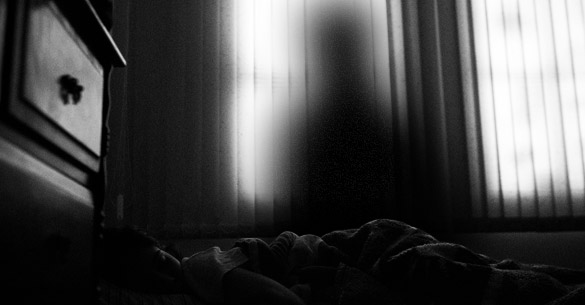
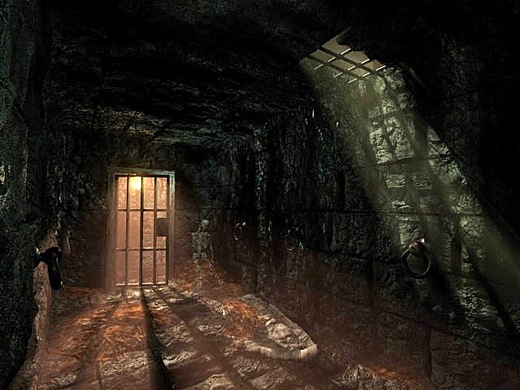
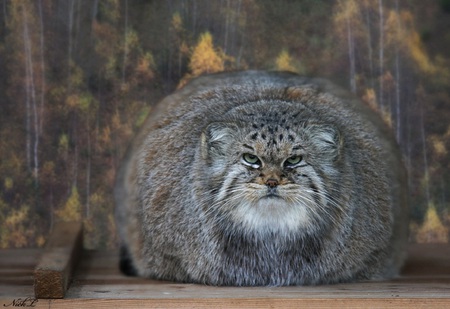
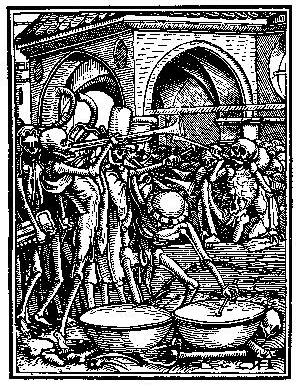
For those following the development of A WIZARD’S LIFE, the foregoing images represent a taste of what’s to come.

BECOME AN APPRENTICE! Click FOLLOW on the right of your screen to stay tuned for updates and for exclusive material on Marc Royston’s A Wizard’s Life, an epic adult fantasy soon to be released as a serialized novel.

FOLLOW ME

one man and field of summer grass

The journey ahead promises to be an exciting one.

I would like to take as many along as are willing to follow.

There is room yet in the caravan.

Medieval Travelers

If you haven’t chosen to follow this blog already, please do so. For those who are following, please extend an invitation to your family and friends. Things are speeding up and the word needs to be spread.

Share the adventure.

Roaring Bear

Surprises await.

walking dead

And romance.

kiss

And mystery.

spooky-forest-670726

And passion.

Burning_Castle_by_sHoCkWaV325

And wonder.

ETHEREAL_HUMAN_Wallpaper_jz30k

Please help our Wizard’s Rally grow.

BECOME AN APPRENTICE! Click FOLLOW on the right of your screen to stay tuned for updates and for exclusive material on Marc Royston’s A Wizard’s Life, an epic adult fantasy soon to be released as a serialized novel.

WELL … WHADDA YA KNOW?

unexpected-growth-jerry-lofaro

As an actor, I never pay attention to reviews. I don’t read them. I don’t really care. Praise is nice, but I don’t perform for praise. I perform for myself. I know when I am “there” and when I am not. Besides, it is easier and more entertaining to write an insult than it is to write praise, and insults do nothing constructive. From what I am told, most of the reviews I have received have been positive–but I would be the last to know and the least concerned. And if I don’t read them, then they can only exist in my mind as generous and full of adulation.

I rarely enter contests of any type. I don’t like to lose, and I don’t like to bet — particularly when I cannot comfortably afford defeat. As a kid, I lived in Las Vegas. I was surrounded by gamblers and knew more than one sad tale of a life lost on a roll of the dice or a flip of a card.

I never understood the addiction to gambling. The wheels, the lights, the flashes, the smoke, the praying for luck, none of it ever made any sense to me and never had any appeal.

I gamble enough on the choices I have made in my life, and I have rolled a hard game. I have gone hungry far too often as it is without throwing away my limited finances by betting against the house.

However, I do on odd occasions play the lottery. When a jackpot climbs above $250 million, I tug a recalcitrant dollar out of my wallet (Oh, yes, it screams as it exits) and I buy a quick pick. Typically, I don’t play any particular numbers. If you’re going to bet that a comet is going to land on your head, it seems a futile effort to describe the color of its tail before it plows into you.

It hasn’t been unusual for me to not check on the lottery results for weeks and even months after the draw (and even not at all). In fact, that’s the norm. I like holding onto the dream that I might actually win something, rather than face the certainty of having lost. It is the illusion of hope that I cling to — not actual hope. It is enough for me that a whisper of hope can be bought, and I try to let that dream last as long as I can.

Really, what else is there in life for us to hold onto but love and hope?

Back in 2011, I entered a writing contest. I don’t think I’ve entered a writing contest since I was in high school. That was sometime during the Paleolithic era I believe. We were using stone tools at the time. We did know about flint though.

I used to win every writing contest I entered. I couldn’t get published, but boy I sure could win writing contests. That used to annoy me. So, I stopped entering contests. And I stopped submitting for publication. The drawer with the rejection slips had more pages than my stories.

But I digress.

I never heard anything about the 2011 writing contest. I didn’t bother to check on it. I entered it hoping to win some money that would allow me to live while I wrote. Once more, letting hope last, I didn’t look for the results of the contest. Besides, I figured if I’d won anything then I’d get a notice. Some fat check would appear clogging up my mailbox with the volume of money it represented, and the paparazzi flashing their cameras would blind me with my own brilliance. Otherwise, if I didn’t hear anything, then it wasn’t worth knowing about to begin with. Nothing lost. And the dream lived on.

I am writing a series of novels in the vein of Robert Jordan’s Wheel of Time epic (meaning it is a fantasy, it is lengthy, and it goes on over many volumes). I began the project in 2010 and am finishing the third volume now. In the coming months, I will be doing polish edits and rewrites for several chapters within the current 3 volumes, which I envision as the opening sequence to a 9 volume series.

I entered the prologue and the first chapter or two of the first volume in the 2011 William Faulkner – William Wisdom Creative Writing Competition.

I really could use the prize money to finish this project. Alas, I did not win.

However, it has just come to my attention that my entry made the Short List of Finalists in the Novel-In-Progress Category.

Well … whadda ya know?

BECOME AN APPRENTICE! Click FOLLOW on the right of your screen to stay tuned for updates and for exclusive material on Marc Royston’s A Wizard’s Life, an epic adult fantasy soon to be released as a serialized novel.

SURPRISE

surprise_face

It is an intriguing experience for an author when his characters make their own choices.

Hieronymous surprised me today.

BECOME AN APPRENTICE! Click FOLLOW on the right of your screen to stay tuned for updates and for exclusive material on Marc Royston’s A Wizard’s Life, an epic adult fantasy soon to be released as a serialized novel.

DISTRACTION

distraction 3

A writer faces many challenges against his or her work. Procrastination, health, finances, and lack of inspiration are but a few.

But no challenge is more insidious or more difficult to handle than distraction.

Whereas procrastination is the willful neglect of a given task, distraction is a waver in concentration brought on by external sources. Procrastination is the writer’s fault. Distraction is not. Either way, procrastination or distraction, the end result is the same. Writing does not take place. Gestating strings of thought are lost. Time must be spent just to recover the point of development abandoned when distraction or procrastination took place.

Once the distraction lands in the writer’s brain, it has done its damage.

Limiting sources of distraction is a writer’s only recourse to handle this particular threat to his or her work.

Turning off the television, not looking at email or text messages, limiting internet searches to anything other than research directly related to the current project, and not answering the phone are the best means of closing the predominant avenues of distraction. Concentration is hard enough without being impinged upon by demands for communications brought on by family, friends, business associates, or strangers. Broadcast media are prone to news flashes that may raise concern of a socially conscious individual. However, more often than not, the writer distracted by such news usually can do nothing at all but empathize and the news could have been heard or watched at another time when the writer could contemplate its meaning without being pulled away from his or her work.

Music and hence music players can be a wonderful tool for inducing an emotional state which the writer wishes to experience as an inspiration toward creating the same emotional state through a written passage. However, a writer must be judicious with his or her time spent playing music. If he or she is paying more attention to the music and less attention to the work at hand, music has become a detriment. Time spent playing music must be invested with discretion.

An author must learn that time is his or her most valuable asset. Time must not merely be spent wisely, but it must be guarded and cherished.

Though time for the universe may be infinite, time for an author is limited.

When someone demands time of a writer, the writer must know that what is being demanded is the most precious thing the writer has to offer. He or she is better off giving blood instead. Those who are in an author’s life must know that the author’s time is worth more than gold.

Time is to be respected. Time is to be cherished.

Like any human, an author is entitled to a social life. Human interactions are necessary. Humans are social beings, and–despite any allegations to the contrary–writers are human. Relations are also necessary to provide the fuel and material upon which the writer draws not only in the creation of his or her work but to provide substance to his or her work.

Relationships require an expenditure of time in order to stay healthy and active.

However, the writer must make it clear that his or her “writing time” is a specific time where interruptions must be of dire nature if they are to occur. The wise writer sets days and times when he or she is “unreachable,” as well as days and times when he or she is open to discourse.

Although a window with some sunshine flowing through it can make a writer feel less isolated, and whereas a picturesque view can be cheering, a window is also an invitation to allow the world entrance into the writer’s workplace. A window is an opening upon distraction and an easy crutch for the procrastinator.

It is best for the writer to turn his or her back to any window and to “exist” only in the “room” of his or her mind when writing.

For a writer at work, it is best to let the world run on its own during writing time. Writing time is sacrosanct. Nothing short of natural disaster or Armageddon should be allowed to intrude.

Writing time is time to be a hermit. A writer at work is a monk at prayer. Let no one interrupt a writer’s quest for union with the divine.

BECOME AN APPRENTICE! Click FOLLOW on the right of your screen to stay tuned for updates and for exclusive material on Marc Royston’s A Wizard’s Life, an epic adult fantasy soon to be released as a serialized novel.

PURPOSE

Writing Image

Why write? What function does it serve? It is a lonely task, often unheralded, frequently ignored, and rarely profitable. So why do it?

The fundamental purpose of writing is to record information and transmit such information over time and distance. Writing allows for non-verbal exchange where the communicator need not be present at the time or in the place in which the information is received. Writing also allows for “permanence” in that the written record may survive the life of the writer. Last, writing allows for “accuracy” in that the words of the writer are preserved and may be checked against for deviations from his or her account.

So, it would seem that if this all comprises the sole function of writing and therefore the reason for reading, then all written materials would be non-fictional.

But, that is not the case.

Fiction exists. Fiction is preserved. Fiction thrives. Fiction is sought and desired. Fiction is created. And fiction is honored.

Why?

The writing of fiction first appeared in storyteller form. Tales were handed down by a verbal tradition. Later, writing fiction into a recorded format developed–whether inked on animal skin, painted on walls, or chiseled into rock. This craft and practice arose so that tales could be disseminated over larger distances and to greater numbers of “listeners” and so that tales could be preserved for posterity in their “original” form.

As writers, we must ask ourselves: Why does the public seek our stories? The answer informs our writing. If we know why readers read, then we know what need or desire we must fulfill in order for our work to be accepted. The better we fulfill those needs and desires, the higher chance we have for critical and financial success and for longevity of our body of work.

The answer is neither unexpected nor astonishing. But it must be borne in mind.

Writing is an art. It is an expression of one individual’s viewpoint, contemplation, emotion, idea, question, or conclusion or any combination thereof.

If we accept that writing is an art, then all art forms share this definition of expression.

So, why is there an audience for any of the arts? Why attend a concert? Why see a film? Why go to an art gallery? Why go to a play? Why watch a ballet? Why read a novel?

The motivation is a common characteristic uniting all the arts.

THE ANSWER: Audiences experience art in order to have an emotional experience. Audiences want to be moved. They want to laugh and cry and cheer and jeer. They are willing to “suspend their disbelief” and accept artifice for reality for a limited time and on a limited scale so that they may live vicariously and be provoked by art.

Upon the storyteller tradition, audiences may ask themselves what is being expressed? They want to understand not only “plot” but message. They will look for the “point.” Finally, they will ask themselves how does the given expression in its given medium relate to their own lives? What does it “say” to them?

Great art elicits emotional response and triggers introspection.

Art can be used as a device not only to communicate ideas and conclusions and beliefs but also to cause examination of those same things.

Art can be used to educate, but the artists must not be didactic or the audience will wander.

Art is entertainment. The fundamental function is to drive an emotional response. To create empathy and to carry the reader on a journey.

Therefore, as a writer, my primary goal is to make the reader feel. I want to give my readers an emotional roller-coaster ride. I want to build anticipation, put them through twists and turns, spin and jostle, cradle and hurl, soothe, jar, and shock. I want to involve my reader and make them feel at risk, while all the while there is no real danger. I want to take my readers in my hands and propel them over a broad range of emotional experiences running the gamut between love and hate, sorrow and joy, fear and anticipation.

I want to thrill my readers’ hearts.

I also want to tickle their brains. I want them to think. I want them to examine their beliefs and want them to question society and their place in the universe. I want them to question reality.

By the time my readers reach the final page of any novel which I have written, I want them feeling that they have lived through an amazing experience. I want them to be “satisfied.” By giving into the narrative and allowing themselves to live with and as my characters, I want them to feel as though they have lived other lives.

I want my readers wanting more.

To find out more about Marc Royston and his latest novel, be sure to follow the Wizard’s Workshop.

BECOME AN APPRENTICE! Click FOLLOW on the right of your screen to stay tuned for updates and for exclusive material on Marc Royston’s A Wizard’s Life, an epic adult fantasy soon to be released as a serialized novel.